Wednesday, February 01, 2012

Meet some of our partners who help to support the medics


The folks at Operation Minnesota Nice, who have partnered with the Soldiers' Angels Deployed Medical team. These wonderful people are helping with some of the big requests I get from large medical units, Combat Support Hospitals and Evacuation units.

These units can treat up to hundreds of patients per week, and it takes an Army (of volunteers) to keep them in such basic needs as laundry detergent, warm clothing, and personal hygiene supplies.

Thanks Minnesota. Go Vikings!

-Rog

Saturday, September 24, 2011

Third annual Pancakes for Soldiers a big success

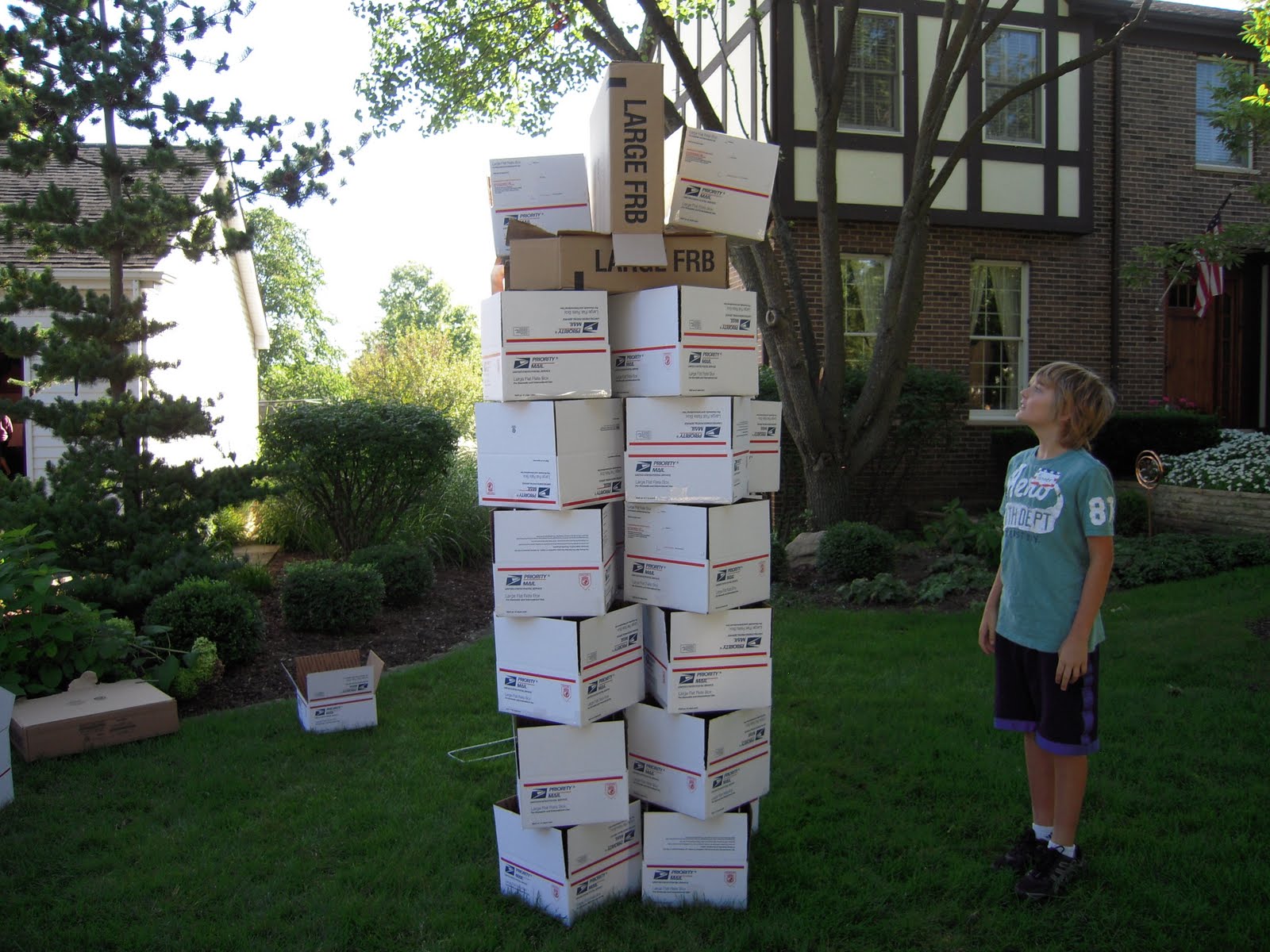
Last weekend was the third annual "Pancakes For Soldiers" event my friends Tina and Dave hold at their house every year.

For the past three years, they've organized this event and invited their friends and neighbors to bring donations of supplies, have an outdoor breakfast, and
then pack up the boxes to ship to medical units.


This year their goal was 100 boxes, and we ended up with more than 130! They ran out of empty boxes and had to make a run to the post office for more.

We were able to send boxes to 17 of our medical contacts this year.

The boxes marked with a "C" are coffee supplies, creamer, sugar, etc, and the rest are of snacks and goodies to give our medics and their patients a little
taste of home.


It is only through the generosity and dedication of folks like these back home that make it possible for us to support our medics and the work they are doing to keep us safe and care for our troops so far from home.


Thanks!
-Rog

Sunday, September 11, 2011

On this 10th Anniversary of the 9/11 attacks, we need to help our troops more than ever

Our troops who are serving in Afghanistan are keeping us safe. They found Bin Laden, and their presence and dogged persistence in rooting out the bad guys has undoubtedly prevented many further attacks on America.

But it comes with a price:


The following requests came from new medical units in Afghanistan who contacted me for assistance IN THE LAST 4 DAYS!! And I've got 70 units on our list already. It's never been this bad in the six years I've been doing this. The requests are coming at me left and right and I can't begin to line up enough support for all for all of them.

"one Combat Out Post we cover has no running water, which means no shower no laundry and barely even a few hot meals."

"the care packages have stopped and I have 9 outposts that we visit to comfort soldiers and give them small items to let them know they are cared for"

"We go around FOB (Forward Operating Base) to FOB meeting with them and putting information out to them by doing some prevention classes such as stress, anxiety, sleep, nightmare, PTSD, anger, communication, and other home front issues"

"This will be my 7th deployment and my second time to request the support from Soldiers' Angels for my junior corpsman. For many this will be their first deployment, and I would like to let them know how much support they will have from home during our tour. "

"Our jobs are to provide first response surgical care to our men and women who are injured while serving on the front lines... We have the only job, where you don't want business, because when we are busy that means one of our brothers or sisters have been injured. This is a time when hearts sink, but training kicks in to ensure we get your family members back home and into your arms once again"

"I've seen many soldiers unable to focus on their mission because of home front issues: spouse, children, elderly parents, and finance; and work related stress."

"I'm writing to request items that will surely lift the Soldiers' spirits and give them some comfort of home when they come into my office. As you know, the rate of suicide among soldiers is at its highest."


Forty years ago I was stationed at Walter Reed Hospital, during the carnage of the Vietnam War. And I never thought I'd see this kind of suffering again.

If you can help with a donation of funds, if you'd like to adopt a medical unit, if you'd like to send a single care package to let these men and women know you care; there many ways to help:

-donate funds

-sponsor a First Response Backpack for a wounded soldier

To adopt a medical unit or donate supplies:
contact me at Rgodskesen@soldiersangels.org

Tell us in your subject line what you want to do:
-donate supplies for the wounded
-send a one-time care package to a medical unit
-adopt a medical unit and send monthly packages

They need your help.
-Rog

Tuesday, September 06, 2011

From one of the chaplains at an Air Force hospital in Afghanistan. Our Soldiers' Angels medical support team was privileged to be able to assist her and her team in their mission.

-Rog

Friday, August 19, 2011

Someone you should know - Our Savior Lutheran Church Quilting Group

Here is a group of dedicated volunteers who work with Soldiers' Angels Medical Support and send their very special and personal expressions of love and support for our wounded troops.


I asked Chris, who is one of the leaders of the group, to send me some information about them so I could post a story, and here's what she sent me. I couldn't say it better myself:

Thanks again for all you do to help us get the pillows and quilts where they are needed to help provide some comfort for our brave soldiers. It continues to be an honor for us to be able to have this part in letting them know how much they are cared about, appreciated and that we are praying for them.

Our quilting group at Our Savior's Lutheran Church in Circle Pines, MN consists of about 15 members. We have been meeting weekly for about 12 years. Our original goal was to make quilts of comfort for members of our church and community who are experiencing serious illness or loss.

In 2009 we learned about Quilts of Valor so felt the urgency to start making quilts for our brave, wounded soldiers. One of our members had a direct connection to Germany - her husband was stationed there. Through her we became connected with Soldier's Angels, so then we had a direct line to be able to send quilts directly to where they were needed. In 2010 we had another new member in our group that had been making small pillows used for transporting and positioning wounded soldiers.

We learned how important they were in providing comfort to a soldier as they were being cared for that we decided our group could help her continue this mission.
In the last 2 years we have provided over 700 pillows and about 50 quilts. We plan to continue this project until all of our soldiers are returned home.


The quilters have sent boxes and boxes full of pillows and these beautiful quilts to Combat Support Hospitals in Afghanistan. When I get a request from one of these front-line medical units, all I need to do is send off an email to Angela, and they take care of the rest.

Thanks Ladies, for all you do!
-Rog

Wednesday, July 27, 2011

Medical Monday: Care for the Combat Medic


—Army Sgt. Jesse Rosenfield, a flight medic with Task Force Thunder Brigade, tends to an injured soldier aboard a Blackhawk helicopter in Kandahar province, Afghanistan, in April 2011.


Having graduated at the top of the Army combat medic course atFort Sam Houston in 1989, Paula Chapman, PhD, knows firsthand the risks and challenges of this honored military profession. Today, she is putting that insight to use as a researcher.

“I suffered some of my own military trauma and basically had to work my way through it,” admits Chapman candidly. “I had to battle the demons and come out the other end of the tunnel. So that’s why I study what I study.”

An investigator at the Tampa VA Medical Center, Chapman is part of a Defense-funded study called Combat Medic Mettle. The threeyear study, now in the data-analysis phase, includes some 800 Army combat medics. More than half served in Iraq or Afghanistan.

The researchers hope to pinpoint the factors that create emotional resilience and enable medics to thrive amid harsh conditions. They also want to learn what combat experiences cause the most stress. The next step will be building training programs that incorporate the findings.

The data collected so far confirm the grim challenges faced by medics during deployment: • 67 percent saw dead bodies or human remains

• 56 percent saw dead or seriously injured Americans

• 53 percent saw sick or injured women or children they were unable to help

• 26 percent reported shooting or directing fire at the enemy, and about 6 percent said they were directly responsible for the death of an enemy combatant

Medics are expected not only to care for their comrades—and for allied troops and civilians—but to function as warriors. In fact, they may need to render care for the same enemy fighter they shot at moments earlier.

“The combat medic attached to a foot patrol has to also act as a soldier,” says Chapman. “They may be gunning down an enemy combatant at one point, and then have to go provide aid to him.”

“Compassion fatigue” is another concern. By nature, says Chapman, medics want to help other people. When they can’t do so, this causes stress. This is the same problem that was documented among many doctors and nurses who served in Vietnam.

“The caretaker begins to be traumatized and fatigued because of the sheer volume of what they have to do and some of what they’re seeing,” says Chapman. “Remember, medics go into this job because they want to help people. When they see ill or injured persons—especially women and children—and can’t help them because the area’s not secure, that’s likely to have an effect on them.”

Chapman also points out that combat medics often see more action than other soldiers. “They may go out with one squad one night and another squad the next.”

The fact that medics know the foot soldiers they are caring for—unlike doctors or nurses at field hospitals—adds yet another layer of stress. “Not only do they have to help them, but they know these people,” notes Chapman. “They serve side by side with them, and they may have seen how the injuries occurred. So it goes beyond compassion fatigue—there’s a little more to it with a combat medic.”

Based on the data they have so far, Chapman and her military colleagues point out that depression symptoms appear to be more common than posttraumatic stress symptoms among medics three months post-deployment. But the researchers are continuing to track study participants to see which symptoms subside over time and which get worse.

Chapman’s team is now launching a related study in conjunction with the Army Medical Department Center and School. The effort will focus on traumas that combat medics may have experienced prior to training, as well as baseline risk and protective factors that could reduce or promote resilience. The goal is to learn which risk factors can be ameliorated, and which protective factors enhanced, through combat-medic training.

Chapman and colleagues plan to include experimental tasks to see how trainees respond to emotional stress. The researchers will measure the heart’s electrical activity through electrocardiograms. They will also look at other known indicators of stress: respiration, eye movement, muscle response, and galvanic skin response—changes in the skin’s ability to conduct electricity. Emotions such as fear, anger and startle can activate sweat glands, and the extra moisture increases conductivity.

Chapman plans to also help conduct a trial involving Navy corpsmen, who care for Marines on the battlefield. Yet another study in the works will zero in on the issue of loss—how medics are affected when they “lose” soldiers, versus being able to save their lives. She hopes findings from all the research will guide the way to improved training to better prepare medics for their role, which is succinctly defined in their creed: “These things we do so that others may live.”

Article by JTOZER, DOD News site

We send a lot of care and comfort items for our deployed medics, not just for their patients. DVD's, coffee, snacks, magazines, special-requests for a favorite treat from back home and endless other items. If you'd like to help adopt a unit of medics on the front-lines, contact us at deployedmedical@soldiersangels.org

-rog

Saturday, July 23, 2011

Laundry in a combat zone

Now I understand why we get so many requests for new socks, underwear and laundry detergent from the front lines.


If you want to help us send these supplies to front-line combat medics, contact me a rgodskesen@soldiersangels.org

-Rog